An outdoor kitchen turns your backyard from a place you visit into a place you live. Instead of running inside every time you need a plate, a drink, or a side dish, everything stays where the conversation is. For Sussex County homeowners who already spend evenings by the pool or around the fire pit, an outdoor kitchen is the natural next step — and May is the right time to start planning if you want to be cooking outside by late summer.
Building an outdoor kitchen in coastal Delaware comes with considerations that differ from inland projects. Salt air, humidity, wind exposure, sandy soil, and local permit requirements all influence how your kitchen should be designed, what materials will hold up, and how utilities need to be routed. This guide covers everything you need to think through before the first block is laid.
Start With How You Actually Cook and Entertain
The biggest mistake homeowners make with outdoor kitchens is designing around what looks impressive in a magazine instead of how they actually use their backyard. Before choosing appliances or materials, answer a few practical questions.
How often do you cook outside? If you grill three times a week from May through October, you need a different setup than someone who hosts a big cookout once a month. Frequent users benefit from a permanent built-in grill with storage drawers, prep space, and a sink. Occasional entertainers might be better served by a simpler island with a quality grill and counter space.
How many people do you typically host? A family of four needs a very different layout than someone who regularly throws parties for 20. Larger gatherings require more counter space, a bigger cooking surface, and enough clearance around the island so the cook is not trapped behind the grill while guests crowd the area.
Where does your kitchen fit in your overall outdoor living space? If you already have a pool and patio, the kitchen needs to integrate with existing traffic patterns. If you are planning everything from scratch, the kitchen placement should be coordinated with your patio design, seating areas, and any future additions like fire features or pergolas.
Choosing the Right Layout for Your Property
Outdoor kitchen layouts fall into four general categories. The right choice depends on your available space, budget, cooking style, and how many people you want to seat or serve at once.
Straight-Line Island
The simplest and most cost-effective layout. A single linear island typically runs 8 to 12 feet and holds a grill, some counter space, and a few access doors or drawers. This works well on narrow patios, against a wall or fence, or as a first outdoor kitchen for homeowners who want to start simple and expand later. In Sussex County, straight-line islands are popular in beach community properties where lot sizes are compact, especially in Rehoboth Beach and Bethany Beach.
L-Shaped Island
Adds a perpendicular wing to the main island, creating a natural work triangle and more counter space. The L-shape provides separation between the cooking zone and the serving or prep area. This layout works well for homeowners who want a sink on one wing and the grill on the other. It also creates a natural bar-seating area on the outside of the L.
U-Shaped Island
The most comprehensive layout. A U-shape surrounds the cook on three sides with maximum counter space, storage, and room for multiple appliances. This is the setup for homeowners who want a full second kitchen outdoors — grill, side burner, smoker, sink, refrigerator, and possibly a pizza oven. The U-shape requires more patio space (typically 12 feet by 12 feet minimum for the kitchen footprint alone) and a higher budget, but it delivers the most complete cooking environment.
Floating or Detached Island
A standalone island placed away from any wall or structure. This gives the cook a view of the yard, pool, or gathering area and allows guests to gather on all sides. Utility connections (gas, water, electric) need to be run underground to the island location, which adds to installation cost but provides the most flexible placement.
Materials That Survive Coastal Delaware Weather
Material selection is where coastal outdoor kitchens differ most from inland projects. The combination of salt-laden air, high humidity, afternoon thunderstorms, and intense summer UV breaks down materials that would last decades in a protected environment. Choosing the wrong materials means peeling, cracking, and corrosion within a few years.
Base Structure
The kitchen island itself needs a structural frame that will not rust, rot, or absorb water. We build outdoor kitchen frames using concrete masonry units (CMU blocks) or aluminum framing systems. Steel studs are common in some markets, but we avoid them in Sussex County because even galvanized steel corrodes in salt air environments. CMU block is our preferred option for most builds — it is affordable, fire-rated, structurally sound, and completely unaffected by moisture or salt.
Countertops
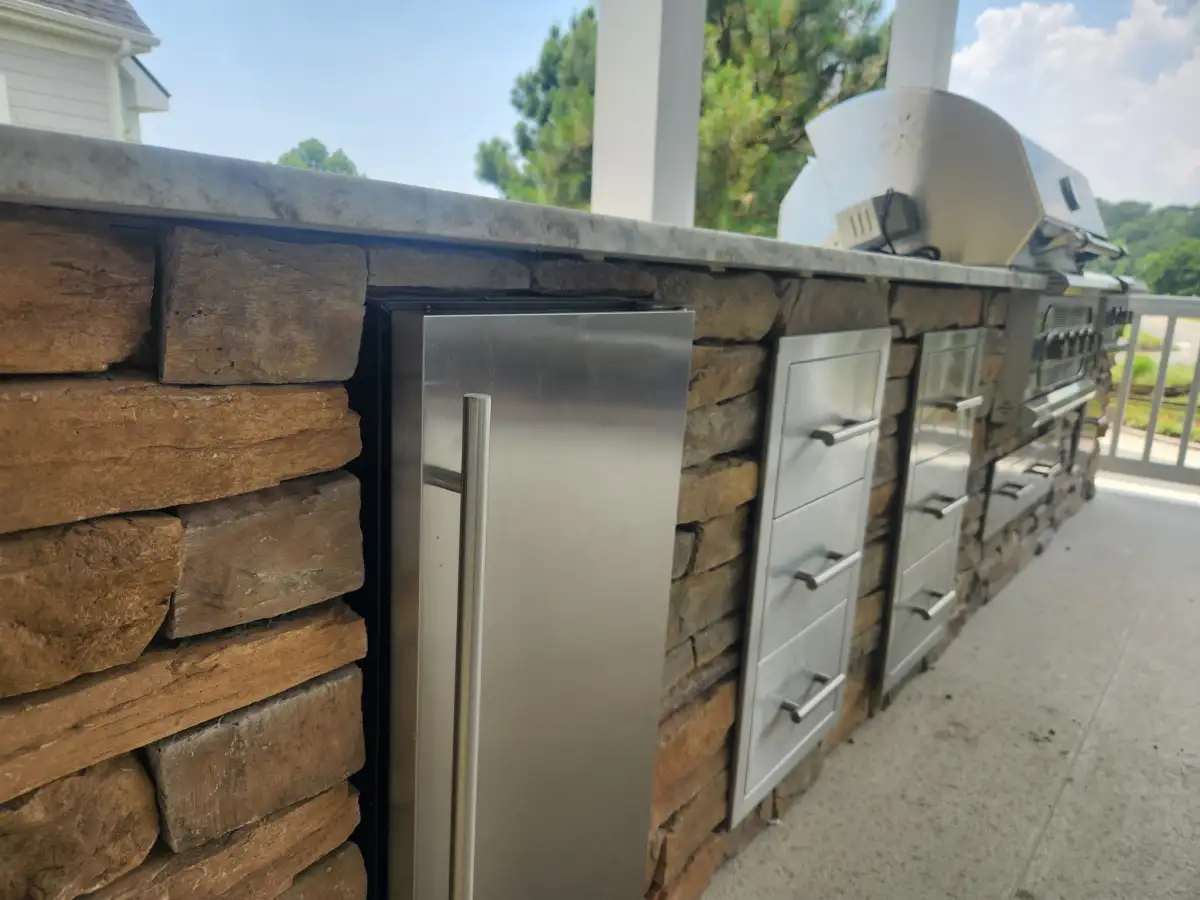
Granite is the most popular outdoor kitchen countertop material in our area, and for good reason. It handles heat from pots and pans, resists scratching, and holds up well to weather exposure when properly sealed. We recommend dark granite colors for outdoor use — lighter colors show staining more easily and require more frequent sealing.
Other options include quartz (check that your specific product is rated for outdoor use — many are not), concrete (custom-poured, excellent durability but can develop hairline cracks), and tile (cost-effective but grout joints require maintenance in humid environments). Avoid marble outdoors — it etches, stains, and deteriorates rapidly in Sussex County's conditions.
Veneer and Finish
The visible exterior of your kitchen island will be covered with stone veneer, brick, stucco, or manufactured stone panels. Natural stone veneer provides the most durable and attractive finish. We commonly use cultured stone or natural stacked stone in earth tones that complement the surrounding hardscape. Whatever veneer you choose, the mortar joints are the weak point — they need to be properly mixed and tooled to prevent water infiltration behind the veneer face.
Appliance Decisions: What You Need Versus What You Want
The appliance selection drives both the size and cost of your outdoor kitchen. Here is a realistic breakdown of what different levels of outdoor kitchen include.
Essential Setup
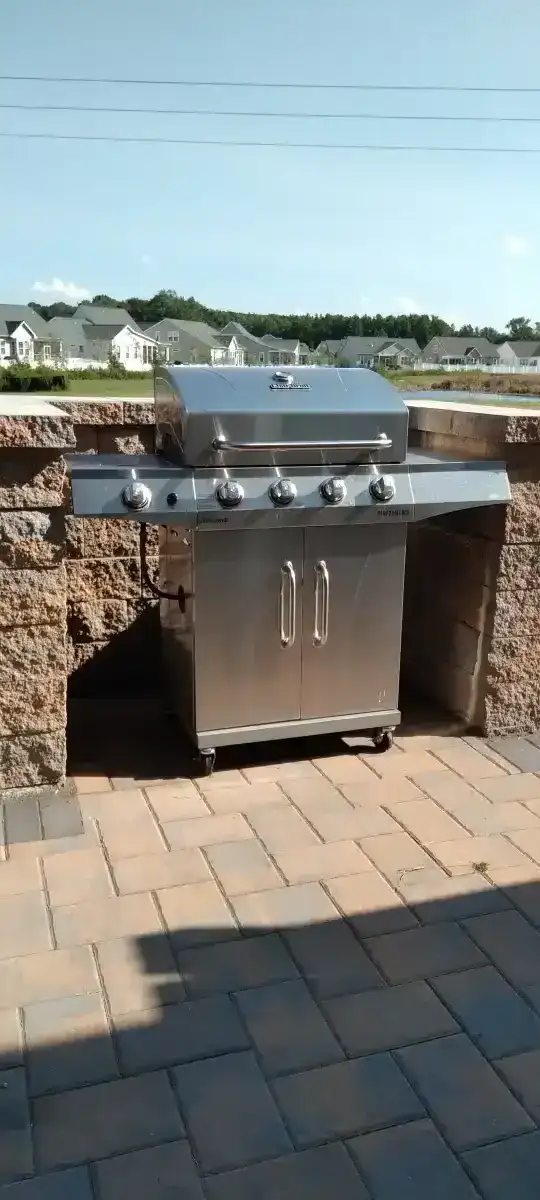
A quality built-in grill (36 to 42 inches) with at least three burners, access doors for propane tank or cleaning supplies, and adequate counter space on both sides of the grill. This handles 90 percent of outdoor cooking for most families. Budget $8,000 to $15,000 for the complete island including construction and a mid-range grill.
Enhanced Setup
Everything above plus a side burner (for sauces, sides, and boiling), an outdoor-rated refrigerator, and a sink with running water. The side burner keeps you from running inside for stovetop tasks. The refrigerator eliminates trips for drinks and cold ingredients. The sink is a convenience that becomes essential once you have it — cleaning hands, rinsing produce, and washing utensils without leaving the cooking area. Budget $15,000 to $25,000.
Full Outdoor Kitchen
Add a smoker or charcoal companion grill, pizza oven, warming drawer, ice maker, blender station, or kegerator. These are lifestyle features that make sense for homeowners who entertain frequently and want their outdoor space to fully replace the indoor kitchen during warm months. Budget $25,000 to $50,000 or more depending on appliance brands and island size.
One important note on appliance quality: outdoor-rated appliances use marine-grade stainless steel (304 or 316 grade) specifically because it resists salt corrosion. Standard indoor stainless steel will rust within a season at a Fenwick Island or Bethany Beach property. The price difference between indoor and outdoor-rated appliances is significant, but substituting indoor models to save money is a decision you will regret within 12 months.
Utility Planning: Gas, Water, and Electrical
Utility connections are the invisible infrastructure that makes an outdoor kitchen functional. They need to be planned early in the design process because they affect island placement, patio layout, and construction timeline.
Gas Supply
You have two options: natural gas (if available at your property) or propane. Natural gas provides unlimited fuel supply and eliminates tank refilling, but it requires a licensed plumber to run a dedicated gas line from your meter to the island. Propane is simpler to install — a tank compartment is built into the island — but you need to plan for tank access and swap-out logistics.
Most properties in Lewes, Rehoboth Beach, and Bethany Beach have natural gas available. Inland communities like Dagsboro, Frankford, and Selbyville more commonly use propane. We coordinate gas line installation with licensed plumbers and ensure all connections meet Delaware building codes.
Water Supply
If your kitchen includes a sink, you need both a supply line and a drain line. The supply line connects to your home's water system. The drain line is where Sussex County requirements get specific — you need either a connection to your existing sewer or septic system, or a dry well for gray water drainage. Your plumber handles the connection, but the drain routing needs to be planned before the patio is built, because the line runs under the paver surface.
Electrical
Outdoor kitchens require dedicated electrical circuits protected by GFCI breakers. At minimum, you need power for the refrigerator and convenience outlets for blenders, phone charging, or lighting. If you are adding a pizza oven with an electric motor, a hood vent, or multiple powered appliances, you may need two circuits. All outdoor electrical work in Delaware requires a licensed electrician and an inspection.
Permits and Code Requirements in Sussex County
Sussex County requires a building permit for outdoor kitchen construction. The permit process typically takes two to three weeks and involves plan review, although it is straightforward for experienced contractors who submit complete applications.
Key requirements to be aware of:
- Setback distances — your kitchen island must meet property line setback requirements, which vary by zoning district. Coastal communities often have stricter setbacks than inland properties.
- Gas line permits — separate from the building permit. Required for any new gas line installation.
- Electrical permits — required for new circuits and outdoor receptacle installation.
- HOA approval — many Sussex County communities (Sea Colony, Plantation Lakes, Bay Forest, Bear Trap Dunes) require architectural review board approval for outdoor structures. We help prepare the documentation and drawings needed for HOA submissions.
- Flood zone considerations — properties in FEMA flood zones may have additional requirements for permanent outdoor structures. This affects some Fenwick Island, Bethany Beach, and oceanfront Rehoboth Beach properties.
We handle the permit application as part of our design-build process. The permit fee in Sussex County is typically $100 to $200 depending on the scope of work.
Foundation Matters: Why Your Patio Needs to Support the Kitchen
An outdoor kitchen island is heavy. A basic 8-foot island with a granite countertop, grill, and stone veneer weighs approximately 2,000 to 3,000 pounds. A larger U-shaped kitchen with a pizza oven can exceed 6,000 pounds. That weight needs to sit on a foundation that will not settle, shift, or crack.
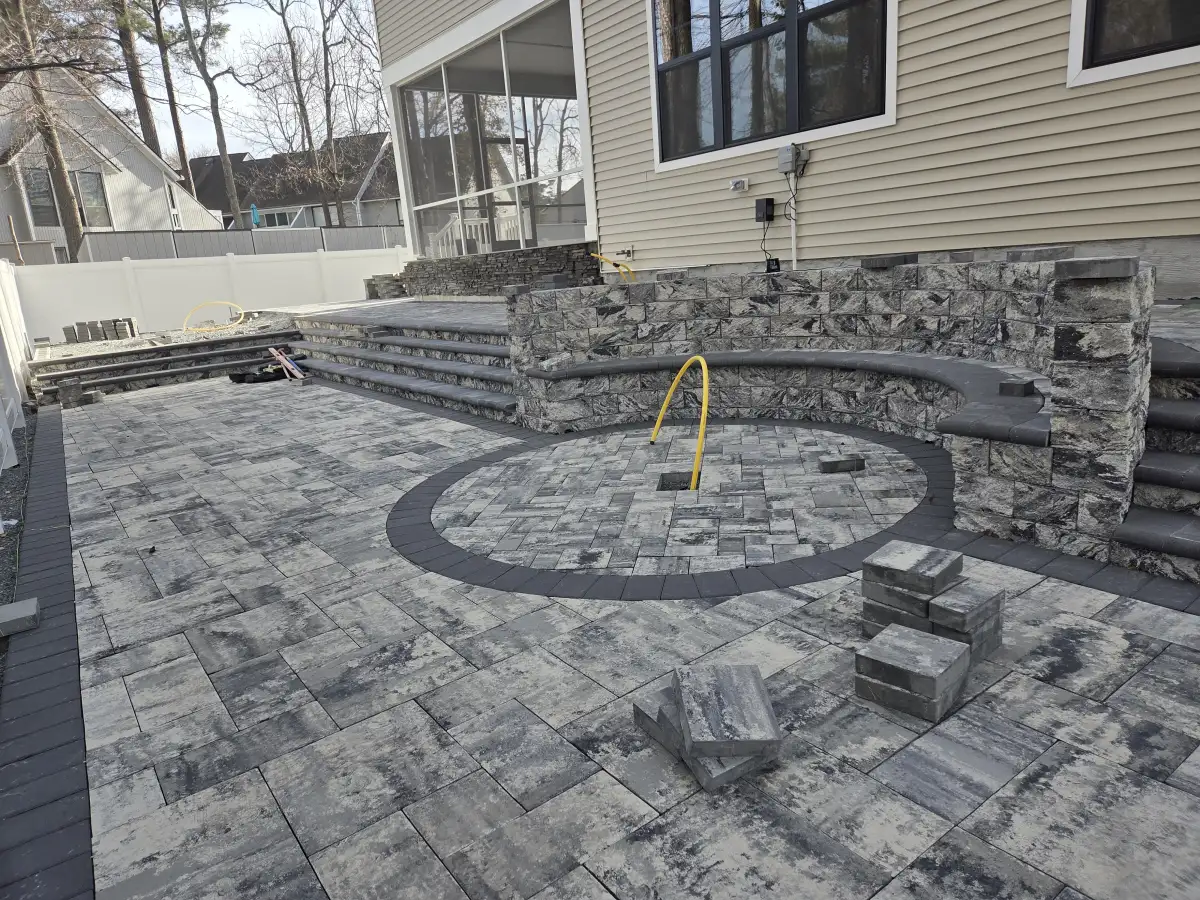
This is why we strongly recommend planning your outdoor kitchen before or during your patio installation — not after. When we know where the kitchen will sit, we can pour a reinforced concrete pad at that location during the patio base preparation phase. Retrofitting a proper foundation under an existing paver patio means pulling up pavers, excavating, pouring concrete, waiting for cure time, and then relaying the pavers. It costs significantly more and disrupts the finished patio.
Sussex County's sandy soil adds another layer of importance to proper foundation design. Sand compresses and shifts under heavy point loads. A standard paver base that supports foot traffic and patio furniture is not adequate for an outdoor kitchen island. We over-engineer the kitchen foundation to prevent the kind of settling that leads to cracked countertops and misaligned doors.
Protecting Your Investment From Coastal Elements
An outdoor kitchen in Dagsboro, Millsboro, or Selbyville will face different conditions than one in Fenwick Island or Bethany Beach, but all Sussex County properties deal with humidity, salt carried by onshore breezes, and intense summer storms. A few protective measures extend the life of your kitchen significantly.
Cover your grill and appliances when not in use. Even marine-grade stainless steel benefits from protection during extended periods of non-use. Quality fitted covers for your grill, side burner, and any exposed appliances cost a few hundred dollars and add years to their lifespan.
Seal granite countertops annually. The sealer creates a barrier against moisture, salt, and stains. A countertop that beads water when wet is properly sealed. A countertop that absorbs water and darkens needs resealing. This is a 30-minute job you can do yourself with a quality impregnating stone sealer.
Consider a pergola or roof structure over the kitchen. A pergola with a solid or louvered roof protects appliances, countertops, and the cook from sun, rain, and salt spray. It also keeps the cooking area comfortable during afternoon thunderstorms that are common from June through September in coastal Delaware. The added cost of a cover structure pays for itself in extended appliance life and usability on days when weather would otherwise drive you indoors.
Realistic Timeline for a Sussex County Outdoor Kitchen
If you start the design conversation in May, here is what a realistic project timeline looks like:
- Design and planning: 1 to 2 weeks
- Permit approval: 2 to 3 weeks
- Material ordering: 1 to 3 weeks (appliance lead times vary)
- Construction: 2 to 3 weeks for a standard island, 3 to 5 weeks for a full kitchen
Total timeline from initial consultation to first cookout: approximately 6 to 12 weeks. Starting the process now puts completion in mid-June to mid-July — well within the prime outdoor cooking season. Waiting until June or July pushes completion into fall, which means you lose most of the summer you were planning around.
Ready to Plan Your Outdoor Kitchen?
The best outdoor kitchens in Sussex County are the ones that fit how their owners actually live — not the ones with the longest feature list. Whether you want a focused grilling station next to your pool or a complete second kitchen that becomes the center of every summer gathering, the planning process is what determines whether the finished result works for you.
At Just Imagine Hardscapes & Pools, we design and build outdoor kitchens as part of cohesive outdoor living environments. Every element — the island, the patio it sits on, the lighting, the fire features, the connection to your pool area — is planned together so it works as a unified space. We handle design, permits, utility coordination, construction, and finishing in-house.
Contact us for a free consultation or call (302) 402-3659 to start the conversation. We serve homeowners in Lewes, Rehoboth Beach, Bethany Beach, Fenwick Island, Millsboro, Dagsboro, Milton, Ocean View, and all of Sussex County, Delaware.