Late April in Sussex County means one thing: summer is roughly five weeks out. Rental properties along the Rehoboth Beach and Bethany Beach corridors need to be guest-ready by Memorial Day weekend. Year-round homeowners in Millsboro, Dagsboro, and Lewes want their backyards dialed in before the humidity and heat arrive in full force. Whether you have a full outdoor living environment or a simple patio and grill setup, now is the time to inspect, clean, repair, and prepare every element of your outdoor space.
This guide walks through every area of your backyard in the order that matters. Each section includes what to check, what you can handle yourself, and when to call a professional. We built these recommendations based on more than 20 years of designing and building outdoor spaces across coastal Delaware.
Start With Your Pool: Open It Right and Avoid Costly Surprises
If you winterized your pool properly in the fall, spring opening should be straightforward. If anything was skipped or shortcuts were taken, this is when you find out.
Begin by removing the winter cover and cleaning it before storing. A dirty cover stored wet will develop mold and degrade faster. Inspect the cover for tears or stretching that might mean it needs replacement before next winter.
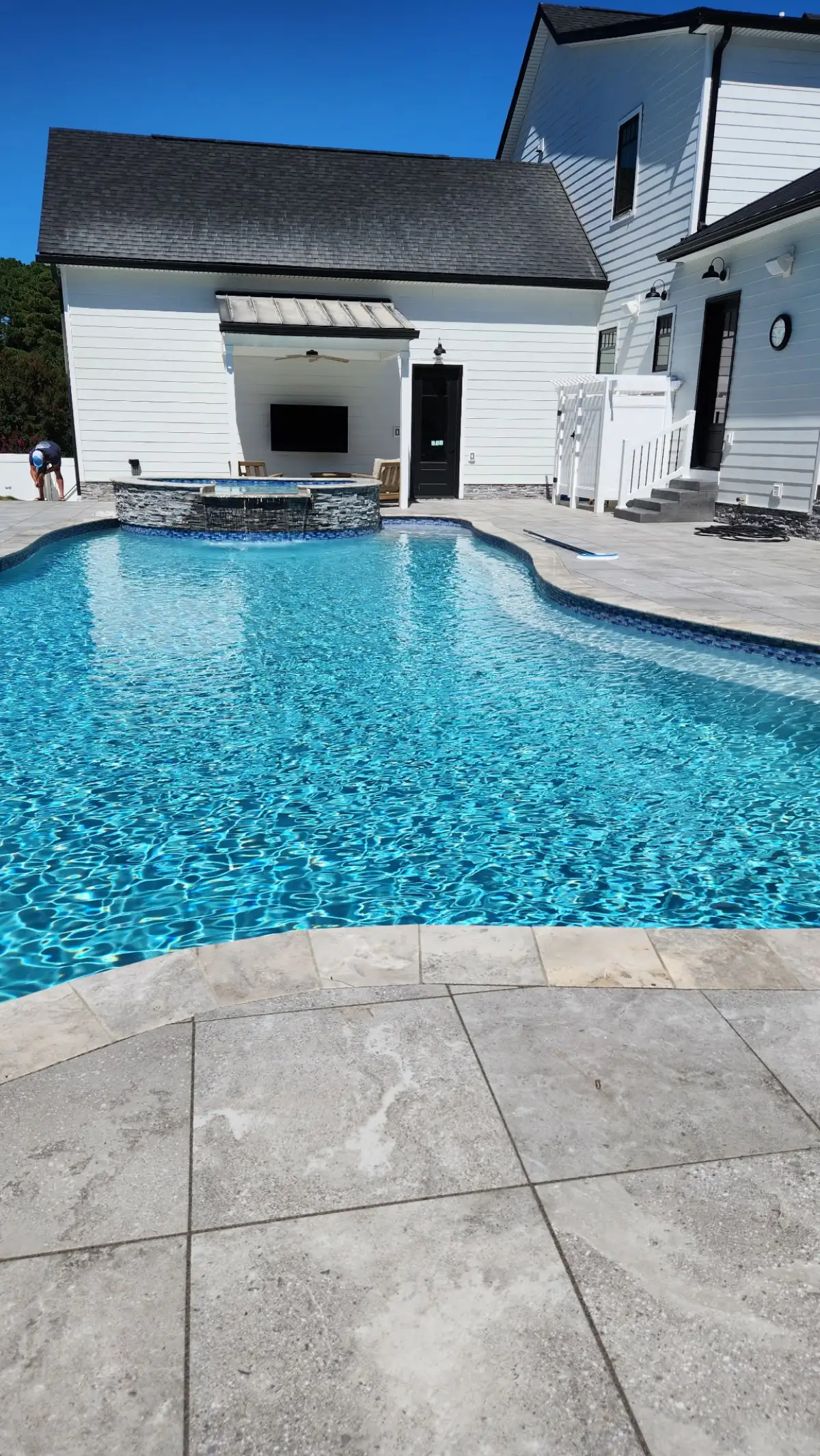
Once the cover is off, visually inspect the pool shell. For fiberglass pools, look for blistering, discoloration, or any surface cracks that appeared over winter. Gunite and concrete pools should be checked for plaster deterioration, tile popping, and coping joint separation. Vinyl liner pools need a careful check for tears, especially around fittings and the waterline.
Equipment Check
Turn your attention to the mechanical equipment before adding chemicals. Inspect the pump, filter, heater, and salt cell if applicable. Check all O-rings and gaskets for cracking. Sussex County winters are mild compared to northern Delaware, but freeze-thaw cycles in January and February can still damage plumbing fittings and valve bodies, especially at properties closer to the coast where temperature swings are sharper.
Prime the pump, check for leaks at every union, and run the system for a full cycle before balancing water chemistry. If you hear unusual noise from the pump motor or notice reduced flow through the returns, address it now rather than in the middle of a July heat wave when every pool service company in the area has a two-week backlog.
For homeowners considering a new pool installation, late April is the last realistic window to break ground and have a completed pool by mid-summer. The permitting process in Sussex County typically takes two to four weeks, and construction runs six to ten weeks depending on pool type and site conditions.
Patio and Hardscape Inspection: What Winter Does to Pavers and Stone
Coastal Delaware does not get the heavy freeze-thaw abuse that northern states experience, but our combination of salt air, humidity, and occasional ice events still takes a toll on hardscaped surfaces. A thorough spring inspection now prevents small problems from becoming expensive repairs by fall.
Paver Patios
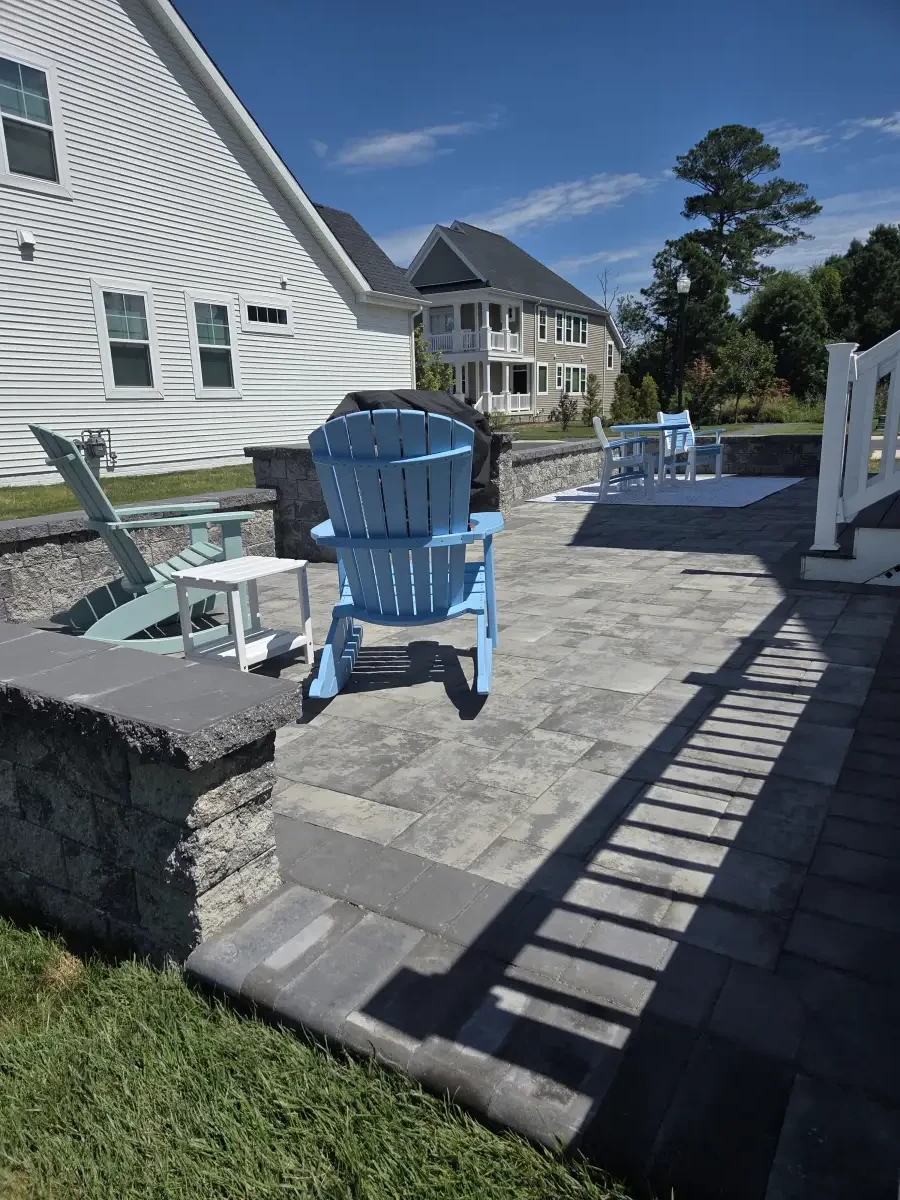
Walk every square foot of your paver patio. You are looking for three things: settling, shifting, and joint erosion. Settling shows up as low spots where water pools instead of draining. Shifting appears as pavers that have moved laterally, creating uneven joints or lips between adjacent pavers. Joint erosion means the polymeric sand between pavers has washed out, which allows further movement and weed growth.
If you find joint erosion in isolated areas, you can re-sand those joints yourself with polymeric sand. Apply it dry, sweep it into the joints, mist with water, and let it cure. For widespread settling or shifting, you are looking at a lift-and-relay repair that requires pulling the affected pavers, regrading and compacting the base, and resetting them. That is a professional job.
Retaining Walls
Check all retaining walls for signs of movement. Look for leaning, bulging, or blocks that have shifted forward. Examine the drainage behind the wall by checking weep holes or the gravel drainage channel at the base. Clogged drainage is the number one cause of retaining wall failure in Sussex County because our clay-heavy soils hold water and create hydrostatic pressure behind the wall face.
Small cracks in mortared walls should be sealed before the summer rain season. Dry-stack segmental walls that show more than half an inch of forward lean need professional evaluation.
Walkways and Steps
Inspect all walkways and steps for trip hazards created by frost heave or root growth. Any lip greater than a quarter inch between adjacent surfaces should be addressed. This matters both for safety and for liability if you rent your property to visitors during the summer season.
Outdoor Kitchen: Get Your Cooking Station Summer-Ready
Your outdoor kitchen sat through five months of winter exposure. Even in coastal Delaware's relatively mild climate, moisture, salt air, and temperature cycling affect appliances, countertops, and structural components. A systematic check now ensures everything works when you fire up the grill for the first cookout.
Appliances and Gas Lines
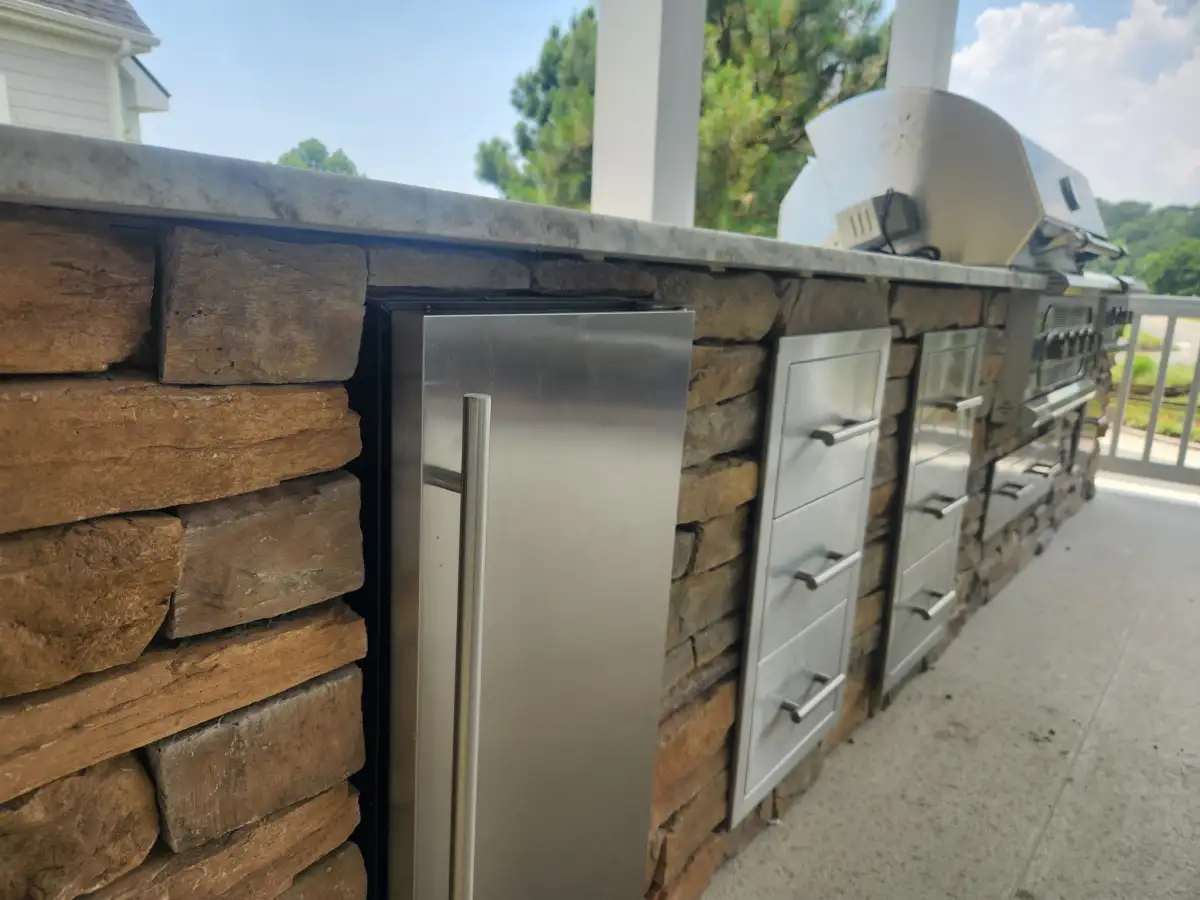
Start with the gas supply. If you have a natural gas line, check every fitting and connection for leaks using soapy water. Turn the gas on, apply the solution, and watch for bubbles at each joint. For propane setups, inspect the tank, regulator, and hose for cracks, corrosion, or damage. Replace any hose that shows cracking or dry rot.
Clean your grill grates, burners, and heat plates. Inspect burner ports for blockages from insect nests, which are common in Sussex County. Spiders and mud daubers love nesting in grill burner tubes over winter. A blocked burner port causes uneven flame and can create a dangerous flashback situation. Use a pipe cleaner or a thin wire to clear each port.
Test your refrigerator, ice maker, and any other electrical appliances. Check GFCI outlets by pressing the test and reset buttons. Coastal humidity causes more GFCI trips than any other environment, so confirm all circuits are functioning properly.
Countertops and Surfaces
Granite and stone countertops should be cleaned with a pH-neutral stone cleaner, not generic household cleaners that can etch the surface. Check the seal by placing a few drops of water on the surface. If the water beads up, the seal is intact. If it soaks in and darkens the stone, you need to reseal. Most outdoor granite countertops in our area need resealing annually due to UV and salt exposure.
Inspect stone veneer on kitchen islands for any pieces that have loosened or cracked. Mortar joints between veneer pieces should be checked and repaired if they have eroded. Catching a loose veneer piece now is a five-minute repair. Ignoring it lets water penetrate behind the veneer, which accelerates deterioration of the cement board substrate.
Landscape Lighting: Test Every Fixture Before the Long Summer Evenings
Outdoor landscape lighting extends your usable hours and dramatically improves safety around pools, patios, steps, and walkways. Spring is when you find out which fixtures survived winter and which need attention.
Turn on every zone of your lighting system after dark and walk the entire property. Check for burned-out LEDs (rare but it happens), fixtures knocked out of alignment by landscaping or snow removal, and corroded wire connections. LED fixtures are durable, but the low-voltage connections and transformer components are vulnerable to moisture intrusion.
Clean lens covers on all path lights and spotlights. Salt film and pollen buildup reduce light output significantly. A damp cloth and mild cleaner restores full brightness in most cases.
If your system uses a timer or photocell, adjust the schedule for longer daylight hours. Most Sussex County homeowners want their landscape lighting to activate around 8:00 PM in summer and shut off around midnight.
Fire Features: Inspect Before You Light
Whether you have a fire pit or outdoor fireplace, never light it for the first time in the season without a thorough inspection. Gas fire features should follow the same leak-check protocol as your outdoor kitchen. Check the igniter, thermocouple, and all valve connections.
For wood-burning fire pits, remove accumulated ash, check the interior for cracks in the fire ring or stone surround, and inspect the cap or screen for damage. Clear any overhanging branches that may have grown closer during the dormant season.
Natural gas fire features near the coast need annual inspection of the burner pan. Salt corrosion can create holes that alter flame patterns and reduce efficiency. If your burner pan shows significant pitting or corrosion, replace it before the season starts.
Pergolas and Shade Structures: Check for Winter Damage
Walk under and around every pergola and shade structure on your property. For wood pergolas, check all joints for loosening, beams for splitting, and posts for rot at ground level. Cedar holds up well in our climate but it is not immune to decay, especially at connections where water can sit.
Aluminum and composite pergolas need less maintenance but should still be checked for fastener tightness and any structural connections that may have loosened from wind loading over winter. Clean all surfaces with a pressure washer on a low setting or a soft brush with mild detergent.
If your pergola has a retractable canopy or louvered roof, test the mechanism before you need it. Lubricate moving parts and check fabric canopies for mildew, tears, or UV degradation.
The Big Picture: Planning New Projects Before Summer
If your spring inspection reveals that your backyard needs more than maintenance, now is the time to plan. Late April through mid-May is the ideal window to schedule a consultation and design process for projects you want completed before peak summer.
Realistic timelines for common projects in Sussex County:
- Paver patio (400-600 sq ft): 1 to 2 weeks from start to finish
- Outdoor kitchen (basic grill island): 2 to 3 weeks
- Pool installation (fiberglass): 6 to 10 weeks including permitting
- Retaining wall (under 100 linear feet): 1 to 2 weeks
- Landscape lighting (full property): 2 to 5 days
- Complete outdoor living space: 4 to 8 weeks depending on scope
Contractors across Sussex County book out quickly once Memorial Day passes. If you wait until June to start the conversation, you are likely looking at a late-summer or fall completion. The design-build process works best when there is time to plan properly without the pressure of a looming deadline.
Your Spring Outdoor Living Checklist
Here is a condensed version of everything covered above. Print this or save it on your phone and work through it over a weekend:
- Remove and clean pool cover; inspect pool shell and coping
- Check pool equipment: pump, filter, heater, salt cell, plumbing
- Balance pool water chemistry after full system test
- Walk all paver surfaces for settling, shifting, and joint erosion
- Inspect retaining walls for movement and drainage blockages
- Check walkways and steps for trip hazards
- Leak-test all gas connections at outdoor kitchen and fire features
- Clean grill burners; check for insect nests in burner tubes
- Test GFCI outlets and electrical appliances
- Clean and reseal countertops if water test fails
- Test all landscape lighting zones after dark
- Clean fixture lenses and adjust timers for summer hours
- Inspect fire pit or fireplace; check burner pan for corrosion
- Check pergola joints, posts, and fasteners
- Schedule professional consultation for any new projects
Need Help Getting Your Outdoor Space Summer-Ready?
If your spring inspection turns up issues that need professional attention, or if you are ready to add a pool, patio, outdoor kitchen, or lighting to your property, we are here to help. Just Imagine Hardscapes & Pools handles everything in-house, from repairs and maintenance to full design-build projects across Sussex County.
Contact us for a free estimate or call (302) 402-3659. We serve homeowners in Lewes, Rehoboth Beach, Bethany Beach, Millsboro, Dagsboro, Milton, Ocean View, and all of Sussex County, Delaware.