
This guide looks beyond installation day to the care, equipment, and future costs that belong in a complete booking conversation.
A new pool changes how you use the backyard for years. Before booking, ask what ownership will require—not just which pool shape fits or how soon excavation can begin. The answers should help you compare pool systems, understand routine care, identify future expenses, and plan the surrounding hardscape for long-term use.
Those questions are especially useful when planning a pool project in Lewes. Coastal weather, storm exposure, sandy soil, flat grades, drainage, and tight access can influence the project plan, while seasonal use affects choices such as heating, covers, lighting, and opening or closing routines. The right answer still depends on the individual property.
The construction plan explains how the pool will be built. The ownership plan explains how it will be operated, cleaned, protected, serviced, and integrated with the rest of the backyard.
What will routine pool care involve?
Pool care is often summarized as the three C’s: circulation, cleaning, and chemistry. Water needs to circulate through the filtration system, baskets and surfaces need regular cleaning, and water conditions need to be tested and kept within the guidance for the pool and equipment.
Before choosing a system, ask how often the homeowner should expect to test and clean, what can be automated, which tasks remain hands-on, and whether seasonal opening and closing applies. Common problems such as weak circulation, dirty filters, debris, algae, staining, or water loss are easier to address when the owner knows what normal operation looks like.
Which equipment choices affect everyday ownership?
The equipment plan deserves the same attention as the visible pool. Ask what pump, filter, sanitizer, controls, lighting, heating, and cover options are proposed; where they will be placed; how they will be accessed; and what routine service each component needs.
Placement matters beyond appearance. The equipment area should allow service access without disrupting seating or walking routes, and the sound and visibility should be considered alongside the complete pool installation plan. If automation is included, ask what it controls, how manual operation works, and what happens if a connected component needs service.
What costs continue after the pool is complete?
The installation price is only one part of ownership. Ongoing expenses may include electricity, water care, seasonal service, filters or other consumables, covers, equipment repairs, insurance considerations, patio care, and landscaping around the pool. The actual amount varies by pool size, system, equipment, usage, weather, and how much maintenance the homeowner performs.
There is also no universal “most expensive part” of every pool build. Excavation, access, the pool system, utilities, equipment, patio area, drainage, safety features, and finish choices can each have a major effect. A written, line-by-line scope is more useful than a broad online average.
What is covered, for how long, and by whom?
Warranty language should identify the covered component, the responsible company, the coverage period, exclusions, required owner maintenance, and the process for requesting service. Ask separately about the pool structure or liner, finish, equipment, coping, patio, and any automated components rather than treating “the pool warranty” as one blanket promise.
The same distinction matters when discussing lifespan. An inground pool does not have one expiration date. The structure, liner or finish, pumps, filters, heaters, lights, controls, coping, and patio age differently. Installation quality, materials, water care, climate exposure, and maintenance all influence how long each part performs.
How should the patio and future features be planned?
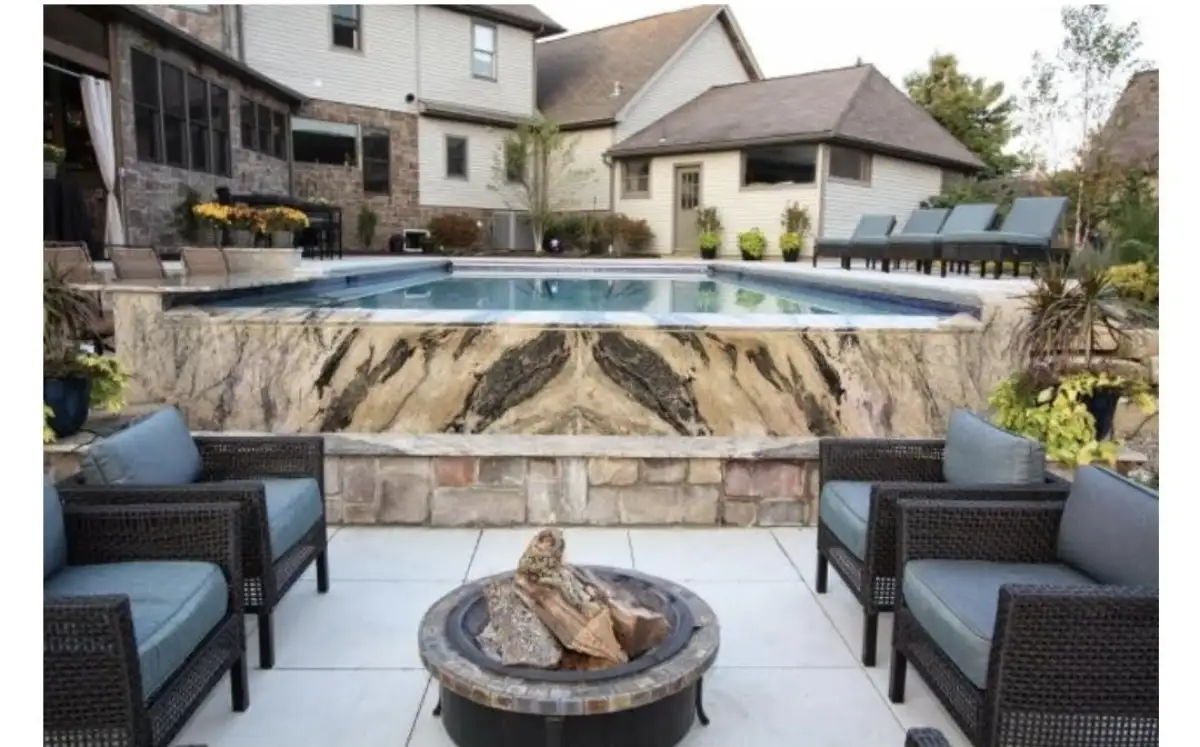
The pool may be the centerpiece, but daily use happens around it. A coordinated plan should account for safe walking space, furniture zones, shade, drainage, equipment access, lighting, fencing, and routes between the house and yard. The amount and layout of the paver pool deck can matter as much as the water dimensions once chairs, loungers, and people occupy the space.
If a future outdoor kitchen, shower enclosure, or landscape lighting is likely, discuss it before construction. Utility routes, elevations, walkways, and open space can be prepared so the first phase does not create avoidable obstacles for the next one.
What should happen at project handoff?
A useful handoff should make ownership feel manageable. Ask who will explain the controls, normal operating ranges, cleaning steps, water-testing routine, seasonal procedures, safety information, equipment documents, and service contacts. Confirm which records you will receive and what to do if the water, equipment, coping, or patio does not appear to be performing normally.
Just Imagine manages larger design-build outdoor projects from excavation through finishing details. For a custom pool and complete outdoor environment, that coordinated scope helps keep the pool, patio, drainage, lighting, equipment access, and future features working from one plan.
Lewes Pool Installation FAQ
What pool ownership costs should be discussed before installation?
Ask about routine water care, electricity, seasonal opening and closing, replacement filters or other consumables, possible equipment repairs, covers, safety features, insurance questions, and care for the surrounding patio and landscaping. Actual costs depend on the pool, equipment, property, and how the pool is used.
What are common pool maintenance problems?
Common issues include water chemistry that moves out of range, weak circulation, dirty or clogged filters, debris, water loss, surface staining, algae, and normal equipment wear. Consistent cleaning, circulation, testing, and timely service help homeowners notice small problems sooner.
What are the three C’s of pool maintenance?
The three C’s commonly refer to circulation, cleaning, and chemistry. Water needs to move through the filtration system, the pool and baskets need regular cleaning, and the water should be tested and balanced according to the pool and equipment guidance.
What is usually the most expensive part of a pool project?
There is no single answer for every property. The pool system, excavation and site access, utilities, equipment, coping, patio area, drainage, safety requirements, and finish selections can all materially affect the total. A line-by-line scope is more useful than a broad average.
How long does an inground pool last?
Service life varies by pool system, installation quality, water care, climate exposure, materials, and maintenance. Some components will need service or replacement sooner than the pool structure, so ask separately about the shell or liner, finish, equipment, coping, and patio.
Plan the build and the years after it
If you are considering a custom pool in Lewes, bring your ownership questions into the first property conversation. Just Imagine can review the pool, surrounding patio, access, drainage, lighting, equipment area, and future outdoor features as one integrated project.
Tell us about your Lewes pool project on the contact page or call (302) 402-3659. Share the property location, the way you want to use the pool, and the complete outdoor space you want to plan.