
Why a Fire Feature Transforms Your Outdoor Space
A fire feature creates a focal point for a patio or backyard gathering area. Start with the view from the house, the space around your furniture, and the routes guests use. Its location should feel connected to the rest of your outdoor space.
Fire features are also one of the most versatile additions to an outdoor living space. A fire pit surrounded by seating walls becomes the center of a conversation area. An outdoor fireplace anchors a covered patio or poolside lounge. A fire table adds warmth and ambiance to an outdoor dining setup.
At Just Imagine Hardscapes & Pools, we build fire features as part of the overall outdoor design rather than as standalone add-ons. When planned alongside your patio, pool deck, or kitchen, the fire feature integrates with surrounding materials, seating, and traffic flow. Any proposed gas supply should be coordinated with the layout and construction sequence by the appropriate professionals. The installation approach depends on the selected feature and site requirements. Not sure which type is right for your space? Read our complete fire feature guide comparing fire pits, fireplaces, and fire tables for Sussex County backyards.
Fire Feature Layouts to Consider
Compare a freestanding fire pit with a feature connected to patio seating. Discuss the shape, fuel, selected product and site requirements that fit the space you have.
Round & Square Fire Pits
A gathering point for a patio, with a block or stone surround that coordinates with nearby paving. Choose the size and fuel system around available seating space, product requirements and the site.
Linear Gathering Areas
A rectangular layout can sit between parallel seating areas or follow the edge of a patio. Compare the available products, their required clearances, and the room needed for people to move around the feature.
Fire Tables
For a compact gathering area, a table-style fire feature may be an option to discuss. Confirm product availability, fuel requirements, placement, and included installation work before adding one to the plan.
Gas vs. Wood-Burning Fire Features
Both gas and wood-burning fire features have advantages. The right choice depends on your lifestyle, your property setup, and how you plan to use the space.
Gas fire features offer convenient ignition and adjustable flame on compatible models, without storing firewood or clearing wood ash. Fuel supply, ventilation, clearances and use beneath any covering must follow the selected product requirements and applicable local rules.
Wood-burning fire pits offer a traditional campfire experience. They also involve smoke, embers, fuel storage and ash cleanup. Consider nearby homes, changing wind and local burning restrictions before choosing wood.
- Gas: convenient controls, with fuel supply and appliance requirements to plan.
- Wood: a traditional flame, with smoke, embers and cleanup to consider.
- Use only the fuel and burner configuration approved for the selected product.
Fuel Planning Priorities
- Confirm safe clearances from structures, fencing, rooflines, and property edges.
- Plan gas routing, shutoff access, and inspection needs before patio work begins.
- Match the fuel type to how often you entertain and how much maintenance you want.
Comfortable Seating Details
- Choose seating dimensions around comfort, furniture, and the selected fire feature.
- Leave clear routes around the seating area and the required separation from the fire feature.
- Consider the appearance of wall caps, lighting, and nearby paving together.
Seating Wall Integration
Comfortable seating makes a fire feature useful for gathering. Plan seat height, walking room and separation from the flame around your furniture, the chosen appliance and its required clearances.
A curved or straight seating arrangement can help define the gathering area. The available space, grade, selected wall system, and fire-feature clearances determine which configurations are suitable.
- Comfortable seat dimensions and a smooth cap suited to the layout
- Curved, straight, or wrap-around configurations
- Material matching with fire pit and patio surfaces
- Discuss columns and lighting as optional parts of the seating-area design
- Size the gathering area around your furniture, expected use, and required clearances
Fire Safety & Delaware Fire Code
The selected fire feature, its fuel and utility connections, and your property determine the requirements to check. Review the product instructions and applicable local rules before choosing a location. The design conversation should address:
- Distance from structures: establish the required separation using the selected product instructions and the rules that apply at your address.
- Property line setbacks: confirm zoning, fire rules and any HOA restrictions before choosing the location.
- Overhead clearance: check the manufacturer instructions before considering a fire feature near trees, roofs or covered areas.
- Gas connections: identify the qualified installer, approvals, shutoff access and inspection responsibilities in the project scope.
- Burn restrictions: check current local restrictions before use; do not assume a particular fuel is exempt.
The proposal should identify required approvals, inspections and who is responsible for each step. Confirm these details before construction begins.
Fire Feature Projects
Explore fire-pit and fireplace design examples and their relationship to nearby paving and seating.
Stone Fire Pits
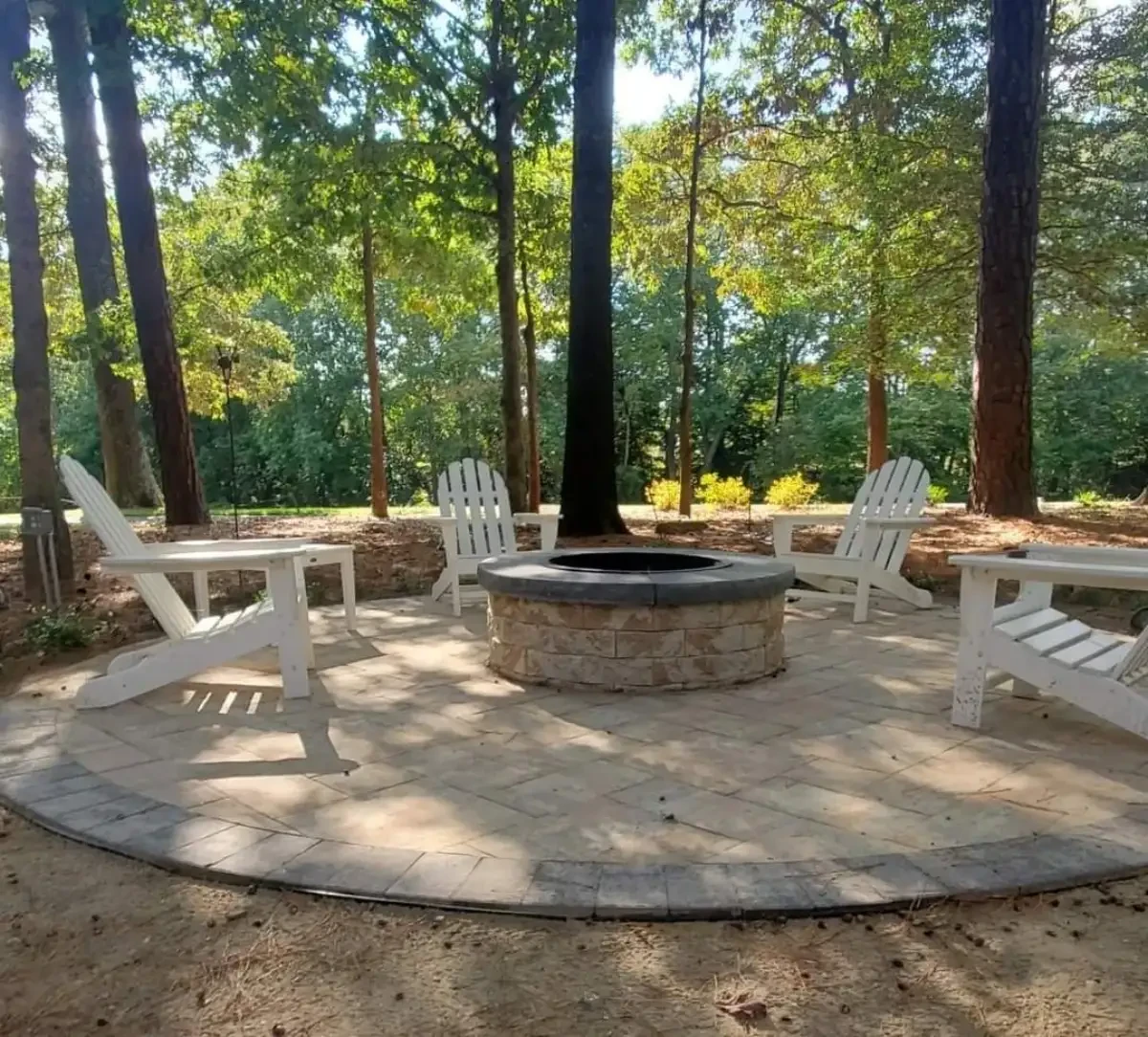
Freestanding fire pits built with block, stone, and cap materials that coordinate with the surrounding paver patio.
Fire Pit + Seat Wall Layouts
Curved or straight seat walls planned around safe clearances, comfortable circulation, and the number of guests you expect to host.
Integrated Outdoor Living
Fire features designed alongside patios, pool decks, kitchens, walkways, and lighting so the finished backyard feels connected.
Fire Feature FAQ
Fire feature pricing depends on the selected unit, surround materials, site preparation, seating and utility work. Request a written estimate for your layout and fuel choice.
A poolside fire feature needs a location and design that work with the selected equipment, fuel arrangement, required clearances, circulation, wind exposure, and nearby structures. Have the applicable product instructions, utilities, and local requirements reviewed before choosing its position. Plan seating and access around both the pool and fire feature.
Permit and inspection requirements depend on the appliance, utility work and jurisdiction. Confirm the requirements for your address and identify approval responsibilities in the project proposal.
Round fire pits work well as the center of a circular or curved seating area. Rectangular fire pits pair naturally with linear seating walls and contemporary patio designs. Square fire pits split the difference and work in both traditional and modern settings. We recommend the shape based on your patio layout and how you plan to arrange seating.
An existing patio needs assessment before a fire feature is added. The selected appliance or construction system, supporting surface, utility route, clearances, and any approvals affect feasibility. Confirm the responsible professionals and the installation scope before assuming that the existing surface or utility arrangement can be reused.
Let's Add a Fire Feature to Your Outdoor Space
Tell us about your patio, pool area, or backyard and the gathering space you have in mind. Request an estimate and discuss the available fire-feature options for your project.